How to Stay Calm as a Teacher During Challenging Moments
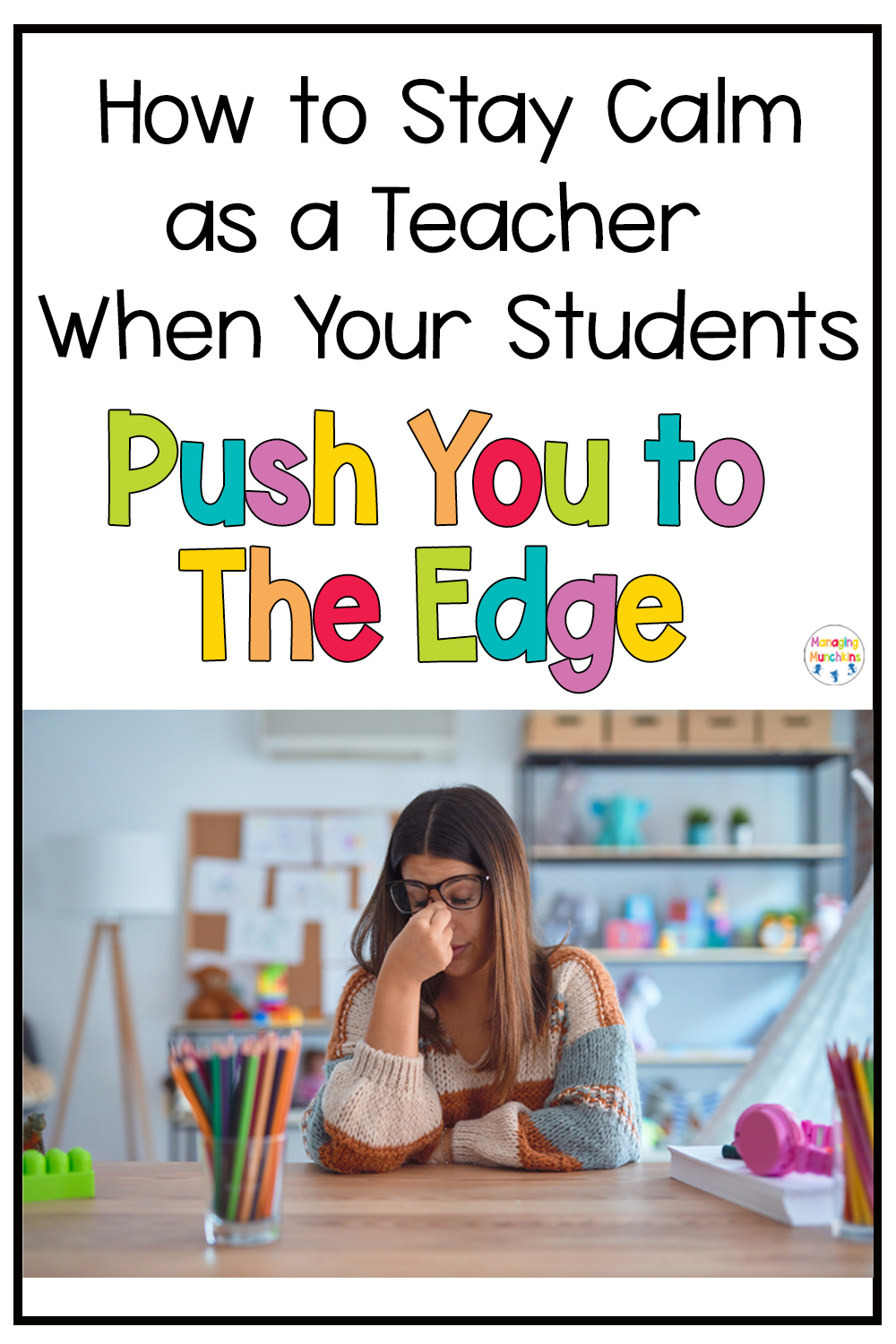
Have you ever had a student push you so far that you felt like you were about to snap? I’ve been there. For a long time, I thought being calm was just a personality trait—but what I’ve learned over the years is this: knowing how to stay calm as a teacher is a skill you can absolutely learn, and it can completely change the way you handle challenging moments in your classroom.
Stick around until the end, because I have a free download you can use in your classroom to help students regulate their emotions right away.
A Day That Taught Me How to Stay Calm as a Teacher
Let me tell you about a day that really shifted my perspective.
I hadn’t slept well the night before. I was battling a migraine and woke up feeling cranky. It was raining, traffic was a mess, and I was running late. By the time my students arrived, I was already foggy, tired, and emotionally disregulated.
Then it happened—the student who really tests you started pushing boundaries. He wasn’t following directions, talking over me, and moving all over the room. I felt my patience snap. I raised my voice slightly, got tense, and felt frustrated.
And in that moment, I realized something crucial: I wasn’t a bad teacher. I was a human trying to regulate tiny humans.
That day taught me the foundation of how to stay calm as a teacher—it starts with taking care of yourself.
Teacher Self-Care: The First Step to Staying Calm
One of the most important concepts I want to share is co-regulation. Kids literally borrow from our nervous system. If we’re calm and steady, they feel calm and safe much faster.
That’s why teacher self-care is not just for you—it’s a classroom management strategy. When your body and mind are depleted, your ability to stay calm shrinks. Simple things like:
- Getting enough sleep
- Drinking water throughout the day
- Eating regularly and not skipping meals
- Moving your body, even for a 10-minute walk
- Doing something to decompress—reading, yoga, baths, or anything that fills your cup
…all of these help you regulate yourself so you can better support your students.
Remember, this isn’t a magic fix, but it’s a critical foundation for staying calm as a teacher. Teachers pour so much of themselves out that it’s easy to run empty. You have my permission to take care of yourself.
How to Stay Calm as a Teacher in the Moment
Even with good self-care, there will still be moments when a student pushes your limits. Here’s what to do in the moment:
Step 1: Pause and Breathe
Stop and take a deep breath, even for a second. Pausing resets your nervous system and helps you respond instead of react.
Step 2: Quick Self-Check
Ask yourself: Am I emotionally regulated right now? What do I need to get there?
If you need to step away briefly, grab water, or just breathe, do it. You can’t regulate a student if you aren’t regulated yourself.
Step 3: Use a Grounding Phrase
Say something simple and calming, like:
- “I can see you’re having a hard time, my friend. I’m here to help you.”
- “Let’s stop and take a deep breath together. Smell the flowers… blow out the candles.”
If the student is in full meltdown, it’s because they’re in the back of the brain (fight, flight, or freeze)—their logical reasoning is offline. You can’t reason with them right now; you need to bring them back to the present moment.
Some grounding techniques I use:
- Go get a drink of water and notice how it feels going down
- Walk around the room to release energy
- Do a quick color hunt around the classroom
- Give a squeeze toy or stuffed animal for tactile grounding
- Talk about something they love, like Disneyland, to gently engage their thinking
The goal is to move students from back-of-brain panic to front-of-brain thinking, where they can begin to regulate and make choices.
Connection Before Correction: A Key to Staying Calm as a Teacher
Always prioritize connection before correction. Once everyone, including you, is calm and regulated, you can move into behavior resets and problem-solving. Correction doesn’t work without calm; regulation always comes first.
You’re an Amazing Teacher
If you’ve ever felt pushed to the edge, you are not alone. Teaching is hard. But hear me clearly—you are an incredible teacher. The fact that you care, learn, and grow makes you amazing. Your students are so lucky to have you.
To help both you and your students stay calm, I created a free Calm Kit, a visual tool you can print and use in your classroom to remind kids to breathe in and out.
Remember: calm is a skill you can learn—and it starts with you. With practice—for both you and your students—you can cultivate it every day.
[Download the Free Calm Kit Here]
Struggling to get your students to follow directions? Watch my video If You’ve Tried Everything and Your Students Still Refuse to Listen for practical strategies to regain control and stay calm in the classroom
Happy Teaching!
– Katherine