How to Stop Hitting in Your Classroom When Big Feelings Take Over
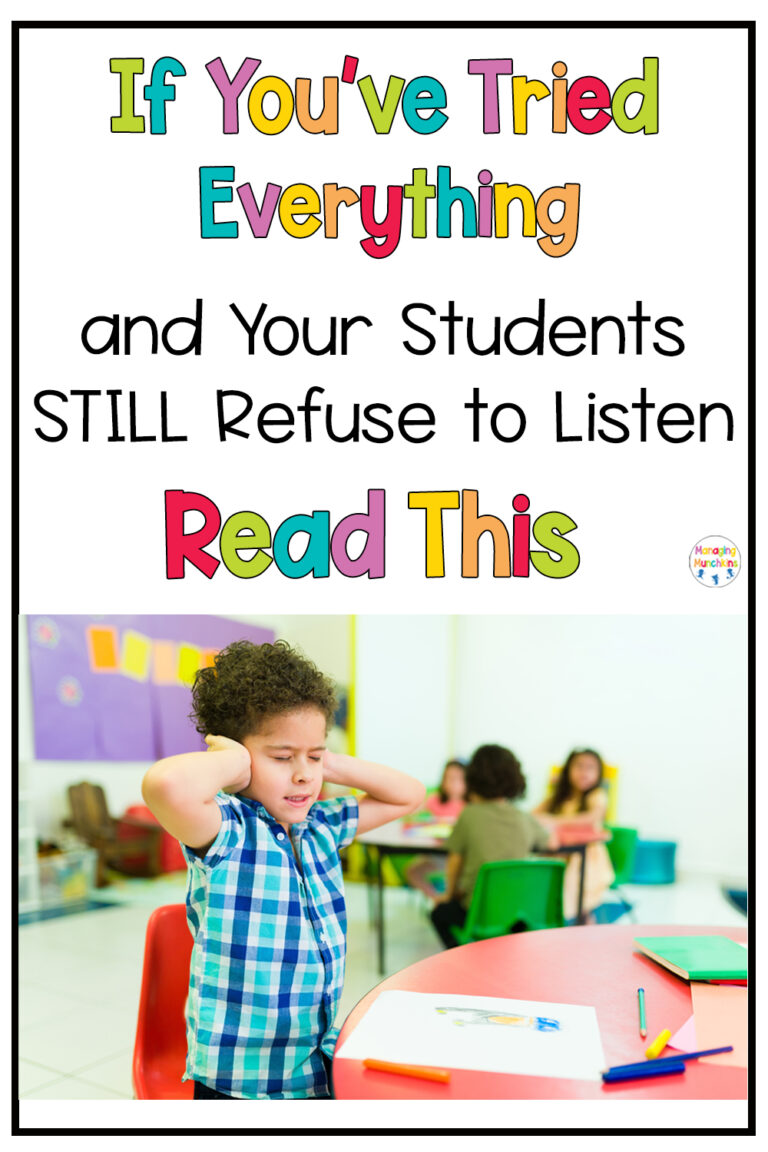
If you’ve found yourself saying “hands are not for hitting” for what feels like the 47th time before recess… this post is for you. This post is going to be all about how to stop the hitting in your classroom when those big feelings take over.
Hitting in the classroom is one of those behaviors that can feel overwhelming in the moment — especially when big feelings take over and little bodies just react. The good news? There’s a clear, kind, and super effective framework for handling it. Here’s exactly what to do.
How to Stop Hitting in the Classroom with One Simple Framework
Step 1: Teach Problem-Solving Skills Proactively
Before a conflict ever happens, you want to give your students a toolkit of ways to solve problems — so hitting isn’t their only go-to.
One of the best tools for this is a “Solve the Problem” sorting activity. Introduce it as a whole-group lesson where kids sort choices into “helpful” vs. “hurtful.” Then display those helpful choices somewhere visible in your classroom so you can reference them all year long.
The key problem-solving skills to teach:
- Say “please stop, I don’t like that” — giving kids the words is huge
- Take turns — if we both want the slide, we go one at a time
- Trade — swap toys so both friends get a turn
- Play together — if someone’s lonely, they can ask to join in
- Share — ask nicely: “Can I please see that?”
- Use your words — instead of grabbing or messing up someone’s tower, ask first
- Ignore the behavior — sometimes the kindest move is to walk away
- Get a teacher — this is the last resort, after other strategies have been tried
Teaching these options explicitly means kids have something to reach for in a heated moment instead of just reacting.
Step 2: Introduce the One-Minute Sharing Trick
This one is a game-changer, especially for sharing conflicts (which often lead to hitting).
Here’s how it works: when a child wants a toy someone else has, they ask, “Can I please see that?” The child holding the toy responds with “one minute” — which in kid-time is about 5-10 seconds. After that minute, they pass the toy over.
Why does this work so well? It prepares the child who has the toy. Instead of being asked to give something up cold turkey, they have a little warning. They can mentally prepare. And then the second child gets a turn — and if the first child wants it back, they ask again, and the cycle repeats.
It sounds simple, but it genuinely helps kids regulate around sharing in a way that “just take turns!” never quite does.
Step 3: In the Moment — Here’s Your Script
Say two students — let’s call them Levi and Johnny — have a conflict. Levi has a toy, Johnny grabs it, and Levi hits him in response.
Here’s how to handle it:
First, get curious. Call both kids over and ask, “What happened, my friend?” Let each child share their perspective — even if you saw the whole thing. This teaches them that their voice matters and helps them practice articulating their feelings.
Then, coach each child through it. To Levi: “It’s important to share with our friends. Next time, remember our one-minute strategy. And if a friend takes something from you, it’s never okay to hit — that hurt Johnny. I need you to say sorry for hitting.” To Johnny: “Next time you want a toy, use your words — ‘Can I please see that?’ What are some other ways you could solve the problem?” Then have Johnny apologize for taking the toy without asking.
Finally, have a “behavior do-over”. This is the magic step. Don’t just correct the behavior and move on — have them redo the interaction the right way. Give Levi the toy back. Have Johnny ask, “Can I please have a turn?” Have Levi say “one minute.” Wait a few seconds. Have Levi pass it over. Then have them switch.
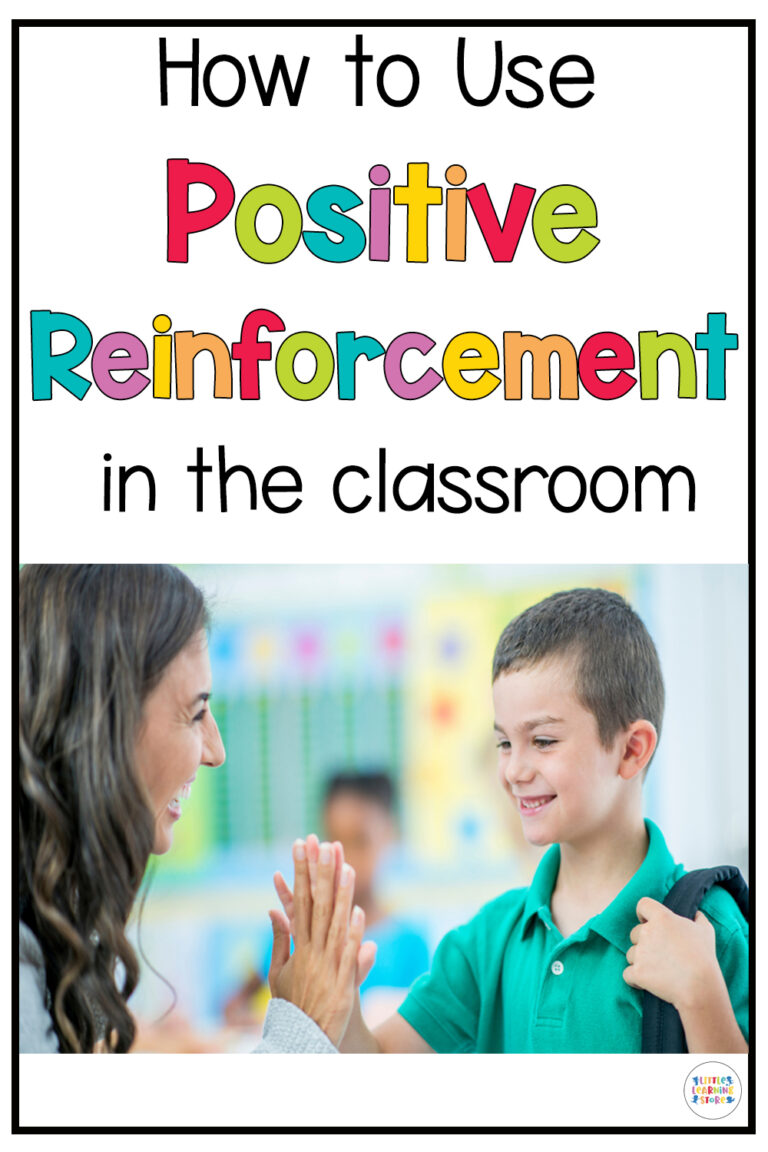
When they do it right, end with genuine praise: “Oh my goodness, friends — look at you sharing! I am SO proud of you. This is how we show kindness.”
Why This Works
People remember 90% of what they do — not what they’re told. By having kids physically act out the correct behavior, it sticks in a way that a lecture never will. And ending with that warm, specific praise seals the whole thing with positive reinforcement.
Remember, it’s not about just giving consequences for hitting. It’s about teaching — clearly, kindly, and repeatedly — what to do instead. This helps to begin to stop hitting in the classroom and replace it with the appropriate problem-solving skills.
You’ve got this, friend. And your students are so lucky to have a teacher who cares enough to learn strategies like this. 💛
Dealing with a kiddo that is hitting or acting out on the daily? Check out my post “How to Handle a Difficult Student (When You’ve Literally Have Tried Everything)”